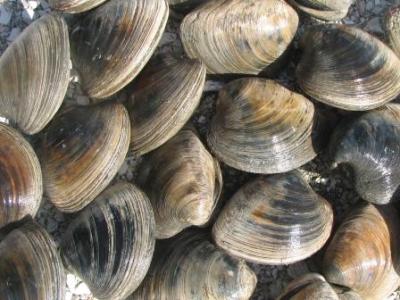
Clamming is a simple way to spend time relaxing with the family. Quahog clams are fairly easy to find, simple to cook and wont spoil as quick as some seafood. Recreational clammers catch quahogs by raking, wading, signing, or other techniques.
Many areas are accessible by foot, while boaters can explore even more possibilities. In some areas, local guides are available to assist visitors on a successful clamming trip.
Raking Clams
Raking is a simple way to catch clams, although the technique can be strenuous. Clam raking is usually done during warm weather since the clammer will be in knee to waist deep water. Special rakes which have a basket attached are used to dig clams from the bottom. Most clammers prefer specific areas or types of bottom for raking.
Wading for Clams
This is the most fun and the least work of all types of clamming. Enthusiasts wade along, sometimes leaning against a boat or tire inner tube with a basket inside it. While walking along the soft bottom, one can feel the clam underfoot. When one is located, the clammer will reach down and pick it up. The most hardcore of waders will go barefoot and extract the doomed clam with their toes. This is not usually recommended as sharp shells can give a nasty cut.
Signing Clams
This is a more difficult method to learn. Clammers walk along the shore or mud flats, looking for a distinctive, “keyhole” shaped air hole in the mud. A little hand rake is used to dig out the clam which will lie just under the surface. This method often yields small delicious quahog clams called “littlenecks”, “topnecks”, or “cherrystones”.