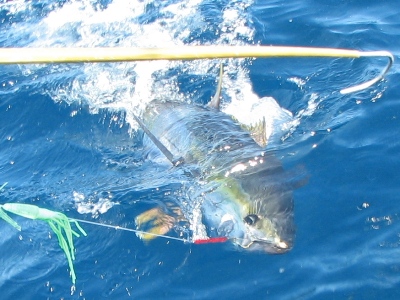
In the Mid Atlantic region, catching yellowfin tuna can vary considerably during the fishing season. At times the action can be red hot out of one port and non-existent just a few miles away.
In North Carolina, recreational anglers usually catch yellowfin tuna all winter. Fishing occurs along the edge of the Gulf Stream. Winter tuna fishing in North Carolina is dominated by large, seaworthy charter boats.
Captains fish ballyhoo/seawitch rigs, and to a lesser extent, artificial lures. A variety of planer rigs are also used and can be extremely effective for catching tuna. During good years, fishing can be spectacular, with boats catching their limits of small to medium yellowfin tuna.
Off the coast of Maryland and Virginia, Yellowfin fishing can start as early as late May although early June is typical. The arrival of fish is dependent on water temperature. During the early season, yellowfin tuna are most likely to show up first along the edge of Norfolk, Washington or Poor Man’s canyons.
Anglers may find success with a variety of daisy chains, artificial squid, spreader bars, small bullet shaped lures or rigged baits such as ballyhoo. Early season success often occurs from 7am until about 10 am, requiring boats to leave port well before sunrise.
By mid summer, fish often take up residence off the Mid Atlantic coast from Virginia to New Jersey. During a typical season, most yellowfin tuna are caught in depths of 30 -50 fathoms. Occasionally the best fishing occurs inshore or offshore of their typical summer grounds.
Popular lures for catching yellowfin tuna vary considerably from port to port. In most areas, green machines, small bullet-shaped lures, tuna spreader bars, artificial squid daisy chains, and ballyhoo/sea witch combinations are among the most effective lures. Most boats troll for tuna at 5.5 – 7 knots, depending on sea conditions and other factors.
One very important note on yellowfin fishing is the use of a long center line rig. Most anglers prefer to run a large boone bird with several vinyl squid trailing, followed by a green machine, back as far as possible on the center line. This can be 300 or more feet back depending on the boat, reel, weather, traffic, and the wishes of the crew. This rig can be absolutely deadly and at times it catches more yellowfin tuna than all other rigs combined.
By July, yellowfin tuna may appear anywhere from inside the 20 fathom line out to 1000 fathoms. Often they will appear in 30 fathoms in mid summer. Finding pods of bait is usually the key to success in catching yellowfin.
When mid season yellowfin are located, the fishing can be very rewarding. The fish will sometimes setup a summer pattern and be consistent for several weeks. As the season progresses, yellowfin may also respond to repeated chunking and become regular visitors to an area where boats congregate.
Offshore fishing enthusiasts often find the challenge of trolling for yellowfin, the thrill of the early morning blitz, and the unique fight of these fish to be very rewarding.