How to Catch and Fish with Live Bait

Live baits can make the difference between success and frustration in many local fisheries. Common live baits for saltwater fishing include spot, mullet, menhaden, pigfish, croakers, sand perch, white perch, silversides, bay anchovies, rudderfish, shrimp, bloodworms, clams, and crabs. Always check local regulations before harvesting bait.

Cast netting local bait

A cast net is an excellent tool for catching live bait. Spot, mullet, menhaden, small crabs can all be caught with a cast net. Local piers, docks, harbors, jetties and beaches are areas that can hold baitfish. Any location that is under an artificial light can be even more attractive, late at night or just before dawn. Another trick is to chum with cat food, and then cast net the area soon after.

Sabiki rigs and other small baits

The most effective rig for catching live bait by far is the Sabiki rig. These rigs will often out fish a conventional leader many times over. Sabiki rigs contain several small hooks with shrimp like lures attached. The leader can be used alone or baited with tiny pieces of bloodworm or other bait. The leader is then jigged slowly along the bottom or around pilings or other structure. This rig will catch small spot, perch and even silversides unbelievably well. The added benefit is this is extremely fun and a good family activity.

Traps

Spot Traps and Other Fish Traps

Obtaining bait offshore

Finding live bait off the Mid Atlantic coast is never an easy task. There are a few possibilities, but rarely can any option be relied on totally. One option is to stop on an inshore wreck or reef and jig small lures for snapper bluefish and other small fish. Another area worth looking in mid-summer is any buoy or floating debris. Often small jacks or other pelagic fish will congregate under an object and strike a small flashy lure or a light leader and baited hook. In some cases a bottom rig will catch small red hake or other fish in depths of 20-50 fathoms.

Once night falls, options get better as squid and sometimes tinker mackerel will appear. Squid will take a baited line, or special jig, while tinker mackerel will eagerly attack the essential Sabiki rig which should be standard equipment on summer overnight trips.

Buying bait

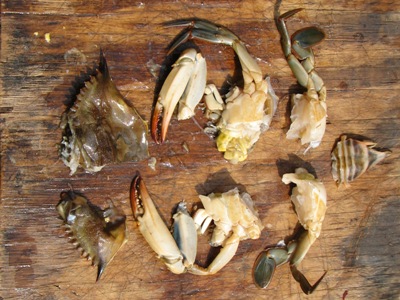
Some shops have lots of live bait options. Minnows, crabs, eels, spot and other live baits can sometimes be obtained. Call ahead whenever possible. Seafood markets are not to be overlooked as a few will carry fresh live crabs and clams. Even fresh whole shrimp can be an excellent bait.

In areas such as the Chesapeake and Delaware Bays, the best baits for many types of fishing are live "peeler" and soft crabs. Peeler and soft crabs are usually bought direct from the wholesaler but are sometimes available from local tackle shops. The price and availability of crabs often fluctuates wildly thru the season.

Live wells

A live well can be worth it's space for many types of local fishing. Proper handling of the baits and adequate spacing is essential. When a live well is not an option, a simple 5 gallon bucket can sometimes keep a few baits alive for a short trip. Even a cooler filled with water can serve as a makeshift live well.

Fishing live baits

Small live baits such as spot, pigfish, etc. can be fished in a number of areas. Inshore, live fish can be drifted or casted around structure such as inlets, jetties, dropoffs, channel edges, and other areas that hold fish. Trout, bluefish, flounder and rockfish are all eager to take a live bait. Offshore, the same applies when fishing chum or chunk lines or other fishy areas.

Storing bait

Not all freshly caught bait can be kept live. Small spot and other panfish make excellent cut bait. Lay the baits in a cooler above the ice, or cut and sprinkle with kosher salt if they will be frozen. Clams are an good candidate for the freezer, just coat heavily with kosher salt and store in a freezer bag or small plastic container. Menhaden and other small fish can be frozen whole for use as chum.

More Saltwater fishing Techniques.


Copyright (c) 2012 Mid Atlantic Fishing
All rights reserved.